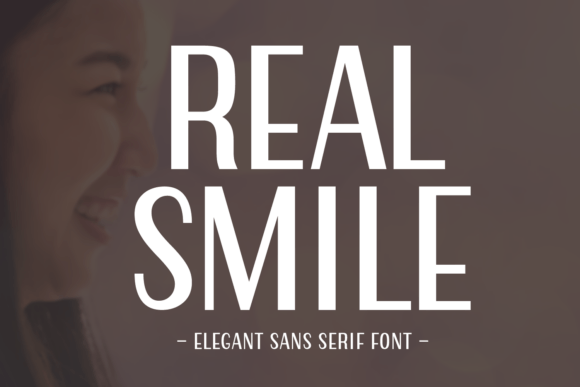
Real Smile Typeface Review: Authentic Sans Serif Style
I was staring at a blank artboard last Tuesday, trying to crack the visual identity for a local ceramic studio. The client wanted something that felt handmade but not messy, modern but not cold. I cycled through the usual suspects—clean geometrics, friendly humanists—but nothing quite hit the mark. Then I loaded up Real Smile. Within minutes, the vibe shifted. It wasn’t just about placing letters; it was about capturing a mood. This sans serif typeface has a way of exuding authenticity and ease that is rare to find in digital fonts. It feels like a breath of fresh air in a room full of stiff corporate typography.
The Personality of Real Smile
What strikes you first about Real Smile is its balance. It manages to be approachable without losing its authority. In the world of brand identity, this is a difficult tightrope to walk. Many friendly fonts lean too far into whimsy, sacrificing professionalism. Others are so rigid they feel impersonal. Real Smile sits comfortably in the middle. It has the clean lines of a modern typeface but retains subtle organic touches that suggest a human hand was involved in its creation.
When I tested it on a logo draft for the ceramic studio, the letters held their own. The weight distribution is even, giving it a grounded feel. It doesn’t shout for attention, which makes it perfect for brands that want to convey sophistication through subtlety rather than loud graphics. It’s a premium font choice for designers who understand that less is often more. The characters have an open aperture, which enhances readability and gives the text a welcoming appearance. This openness is crucial when you are trying to build trust with an audience, whether through a website header or a printed business card.
Performance Across Branding Materials
A font might look great in isolation, but the real test is how it performs across various mediums. I took Real Smile through a rigorous workflow, applying it to different design assets to see where it shined and where it struggled.
- Logo Design: As a primary logotype, Real Smile works beautifully. Its distinct character shapes ensure that the brand name remains legible even when scaled down for social media avatars or favicon icons. It avoids the generic look of overused system fonts, giving the logo a custom, bespoke feel.
- Packaging Design: I mocked up a label for a small-batch skincare line. Here, the font’s authority came into play. It looked crisp against matte textures and added a layer of perceived value to the product. It’s an excellent choice for packaging design where clarity and elegance are paramount.
- Web Design: On screen, the font renders cleanly. I used it for hero sections and navigation menus. The spacing is generous enough to prevent visual clutter, making it a strong candidate for modern, minimalist web design. However, I would hesitate to use it for long paragraphs of body text. It is best utilized as a display font or for short headings where its personality can truly resonate.
- Social Media Graphics: For Instagram posts and story templates, Real Smile is a winner. It pairs well with photography, allowing images to take center stage while providing clear, stylish captions or overlays. It helps maintain consistency across a feed, which is vital for brand recognition.
Strategic Font Pairing Advice
One of the joys of working with a versatile sans serif font like Real Smile is the flexibility it offers in font pairing. Because it is neutral yet characterful, it plays well with others. During my project, I experimented with a few combinations to see what stuck.
For a classic, editorial look, I paired Real Smile with a high-contrast serif font. The juxtaposition of the clean sans serif headlines against the elegant serif body text created a sophisticated hierarchy that felt both traditional and contemporary. This combination is ideal for magazines, lookbooks, or high-end retail websites.
If you are aiming for a more casual, approachable vibe, try pairing it with a subtle handwritten font or a light script font for accents. Real Smile provides the structural backbone, while the script adds a personal touch. This works wonders for boutique shops, cafes, or creative studios that want to highlight their artisanal roots. Avoid pairing it with another geometric sans serif, as the lack of contrast can make the design feel flat and uninspired.
Limitations and Practical Considerations
While I am a fan of Real Smile, it is not a one-size-fits-all solution. Designers need to be honest about where a font falls short. This typeface is not designed for dense blocks of text. If you are laying out a novel or a technical manual, you will want a dedicated body text font with optimized x-heights and spacing for prolonged reading. Real Smile is a creative font meant for impact, not endurance.
Additionally, consider the context of your client. If you are designing for a highly conservative industry, such as law or finance, the inherent ease and authenticity of Real Smile might feel too relaxed. It thrives in lifestyle, beauty, food, creative services, and retail sectors. Always review the specific styles included in the font family. Check for alternates, ligatures, or swashes that might add extra flair to your editorial design or logo work. Not every project needs these extras, but having them available expands your creative toolkit.
Before finalizing any client work, always test the font in its intended environment. Print a proof. View it on multiple devices. Check how it looks in low light and bright sunlight. These small steps ensure that the commercial font you choose performs as expected in the real world.
Licensing and Final Thoughts
As with any professional tool, understanding licensing is non-negotiable. Before using Real Smile in a commercial project, verify the license terms. Are you using it for a client logo? A website? A print-on-demand product? Most premium fonts require specific licenses for different uses. Ensuring you have the correct rights protects both you and your client from legal issues down the line. It is a simple step that reflects professional integrity.
In a market saturated with generic fonts, finding a typeface that feels genuine is a relief. Real Smile delivers on its promise of authenticity. It is a reliable partner for designers looking to create brand identities that feel human, sophisticated, and memorable. Whether you are refreshing a café’s visual identity or launching a new skincare line, this sans serif offers the perfect blend of ease and authority. It invites the viewer in, making them feel comfortable while establishing the brand’s credibility. That is a powerful combination, and one that deserves a spot in your typographic arsenal.